Mornings Begin the Night Before
Many people try to fix difficult mornings by changing their mornings.
Earlier alarms.
Stricter routines.
More discipline.
But the quality of a morning is often decided the evening before.
Slower evenings create a bridge — a gentle transition from activity to rest. And that transition matters far more than most people realise.
Fast Evenings Keep the Nervous System Alert
When evenings stay busy:
- Screens stay bright
- Conversations stay stimulating
- Tasks stay unfinished
- The mind stays “on”
Even if you sleep, your system hasn’t fully stood down.
The result?
- Rest that feels shallow
- Mornings that feel heavy
- Energy that takes longer to arrive
It’s not a motivation problem — it’s a rhythm problem.
Slowing Down Is Not the Same as Stopping
Slower evenings don’t mean doing nothing.
They mean:
- Fewer decisions
- Softer inputs
- Gentler pacing
- Clear signals that the day is closing
This might look like:
- Dimming lights
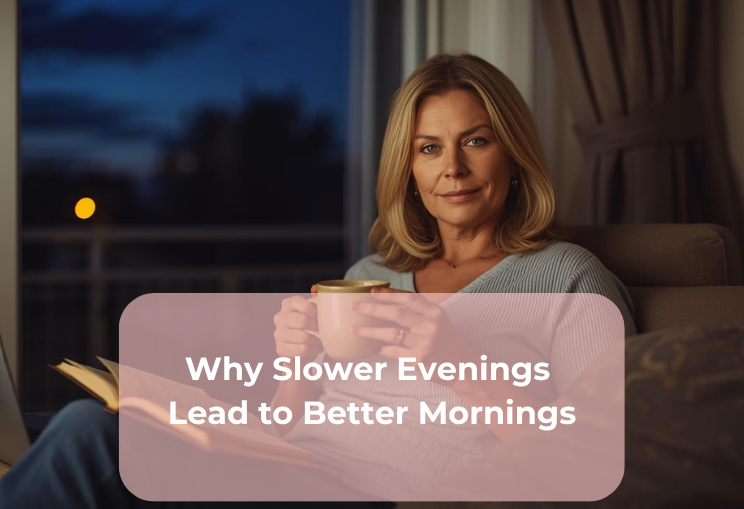
- Warm drinks
- Light stretching or reading
- Simple reflection
- Putting work away earlier
Small cues tell your body: it’s safe to rest now.
Midlife Makes Evening Rhythm More Important
In midlife, the nervous system becomes more sensitive to overstimulation.
Late evenings filled with:
- Screens
- News
- Work thoughts
- Digital noise
can quietly sabotage sleep quality — even if sleep duration stays the same.
Slower evenings help regulate:
- Hormones
- Sleep cycles
- Morning alertness
- Emotional steadiness
They’re not indulgent — they’re supportive.
Slower Evenings Create Clearer Mornings
When evenings are calmer:
- Sleep deepens naturally
- Mornings feel less rushed
- Focus arrives sooner
- Energy feels steadier
You don’t need to force the day to start.
It unfolds more easily.
This is especially powerful for people balancing wellness, online work, and flexible lifestyles.
Travel and Flexible Living Benefit From Gentle Evenings
When you travel or work flexibly, evenings can easily blur.
Different time zones.
New environments.
Unfamiliar routines.
A simple, repeatable evening wind-down becomes an anchor — something familiar that travels with you.
That anchor often determines how the next day feels.
How to Create a Slower Evening Without Overthinking It
Start small.
Choose:
- One calming activity
- One consistent time cue
- One clear end-of-day signal
That’s enough.
Consistency matters more than perfection.
Body Rests More Deeply
Better mornings don’t come from pushing harder at sunrise.
They come from softening the edges of the day before.
When evenings slow down, the body rests more deeply, the mind resets more fully, and mornings arrive with less resistance.
That’s not coincidence.
That’s rhythm.