Long Walk Days Are One of Travel’s Greatest Joys
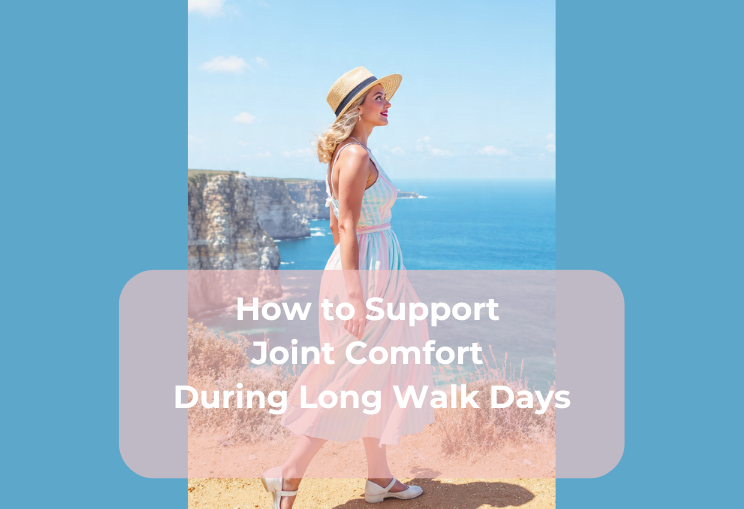
Exploring on foot is one of the best parts of travel.
You notice details.
You move at human pace.
You feel connected to place.
But long walk days also place repeated demand on joints — especially hips, knees, ankles, and feet.
Supporting joint comfort isn’t about limiting movement.
It’s about making movement sustainable.
Joint Discomfort Is Often About Load, Not Weakness
Joint discomfort during travel is rarely a sign that something is “wrong.”
More often, it’s caused by:
- Increased mileage compared to normal days
- Hard or uneven surfaces
- Longer periods on your feet
- Reduced recovery between days
- Footwear that isn’t well matched
The joints are simply carrying more load than usual.
With the right support, they adapt well.
Midlife Joints Need More Preparation and Recovery
In midlife, joints are still capable — but they appreciate care.
Support becomes important because:
- Warm-up matters more
- Recovery takes slightly longer
- Small irritations can compound if ignored
Gentle preparation and recovery help joints stay comfortable without restricting enjoyment.
Simple Ways to Support Joint Comfort on Walk Days
You don’t need complicated routines.
These small habits make a big difference:
- Start gently — ease into the day before long stretches
- Wear supportive footwear — cushioned, flexible, and well-fitted
- Take micro-breaks — short pauses prevent overload
- Hydrate well — joints rely on fluid balance
- Vary your pace — steady rhythm beats constant speed
These habits reduce cumulative strain.
Gentle Movement Before and After Walking Matters
Joint comfort improves when movement is balanced.
Before long walks:
- Light ankle circles
- Gentle hip and knee movement
- Short warm-up stroll
After walking:
- Easy stretching
- Elevating feet briefly
- Gentle mobility, not force
This helps joints transition in and out of load smoothly.
Nutrition and Rest Support Joint Comfort Too
Joint comfort isn’t only mechanical.
Support also comes from:
- Regular meals for tissue recovery
- Adequate protein
- Anti-inflammatory foods when available
- Quality sleep
Rest allows joints to repair overnight — making the next day easier.
Joint Comfort Improves Travel Enjoyment
When joints feel supported:
- Walking feels lighter
- Fatigue arrives later
- Focus stays on the experience
- Confidence in movement increases
You stop monitoring discomfort — and start enjoying the surroundings.
Calm Pacing Protects Joints Better Than Pushing
Trying to “fit it all in” often leads to joint flare-ups.
Calm pacing:
- Preserves energy
- Reduces strain
- Keeps joints responsive
- Makes long days repeatable
Sustainable travel is about continuing comfortably, not enduring.
Simple Recovery Habits
Long walk days don’t have to leave joints sore or stiff.
With gentle preparation, mindful pacing, and simple recovery habits, joints stay comfortable — allowing you to explore freely and enjoy movement throughout your travels.
That’s how walking stays a pleasure, not a price.