Commitment Often Gets Confused With Force
Commitment is often framed as intensity:
- Pushing through resistance
- Holding yourself to rigid standards
- Never letting up
But this version of commitment usually relies on pressure — and pressure rarely lasts.
True commitment feels different.
It’s quieter, steadier, and far more sustainable.
Why Pressure Eventually Breaks Commitment
Pressure creates short-term compliance but long-term resistance.
When commitment is driven by pressure:
- Motivation fluctuates
- Guilt creeps in
- Burnout becomes likely
- Progress feels fragile
Over time, pressure turns commitment into something to escape rather than maintain.
Calm Commitment Is Built on Fit, Not Force
Commitment lasts when it fits your life.
That means:
- Expectations match energy
- Pace feels realistic
- Habits feel repeatable
- Progress feels kind
When commitment fits, it doesn’t need to be enforced.
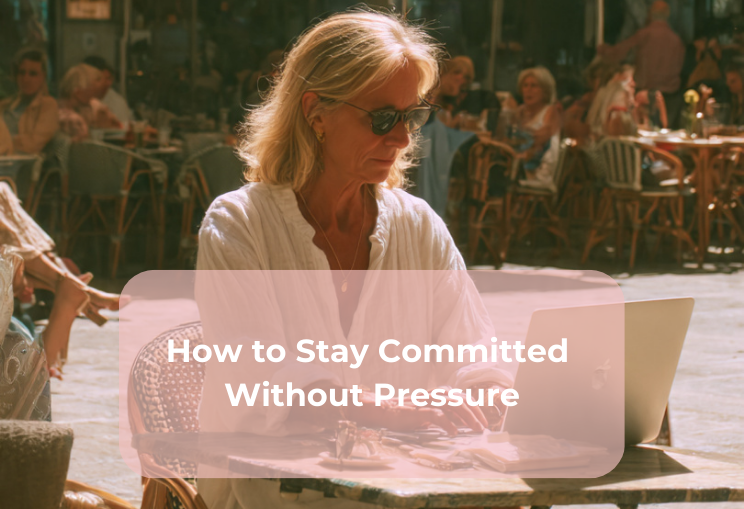
Travel Shows How Commitment Can Feel Light
Travel often reveals a gentler form of commitment.
You may:
- Walk each morning without forcing it
- Choose simple meals consistently
- Keep small routines wherever you are
These commitments last because they feel supportive — not demanding.
Midlife Changes the Rules of Commitment
In midlife:
- Energy is more precious
- Recovery matters more
- Stress costs more
Commitment built on pressure becomes unsustainable.
Commitment built on alignment becomes powerful.
Small Commitments Protect Momentum
Staying committed doesn’t require doing everything.
It requires doing enough — consistently.
Small commitments:
- Reduce resistance
- Lower mental load
- Build confidence
- Keep momentum alive
They allow progress to continue even on low-energy days.
Letting Go of “All or Nothing” Is Essential
Pressure often comes from extremes:
- Perfect or failed
- On track or off track
- Success or setback
Calm commitment allows for:
- Adjustments
- Pauses
- Slower days
Progress doesn’t disappear when pressure is removed — it stabilises.
Commitment Grows Through Trust
Each time you honour a small promise to yourself, you build trust.
That trust says:
“I don’t need to force myself — I can rely on myself.”
Trust is the foundation of lasting commitment.
Systems Make Commitment Easier
Commitment lasts longer when systems support it:
- Predictable routines
- Clear defaults
- Simple structures
Systems remove the need to recommit every day — the commitment is already built in.
You’re Allowed to Commit Gently
Commitment doesn’t have to feel heavy to be real.
You’re allowed to:
- Move at your pace
- Rest without guilt
- Adjust without quitting
- Continue without pressure
Gentle commitment often outlasts intense effort.
Progress Becomes Steady
Staying committed without pressure is possible — and powerful.
When commitment is built on alignment instead of force, progress becomes steady, confidence grows naturally, and freedom deepens.
That’s not lowering standards — it’s choosing sustainability.