Freedom is commonly portrayed as:
• Breaking away
• Escaping structure
• Leaving responsibilities
• Rejecting routine
But in midlife, freedom feels different.
It feels steadier.
Less dramatic.
More grounded.
More intentional.
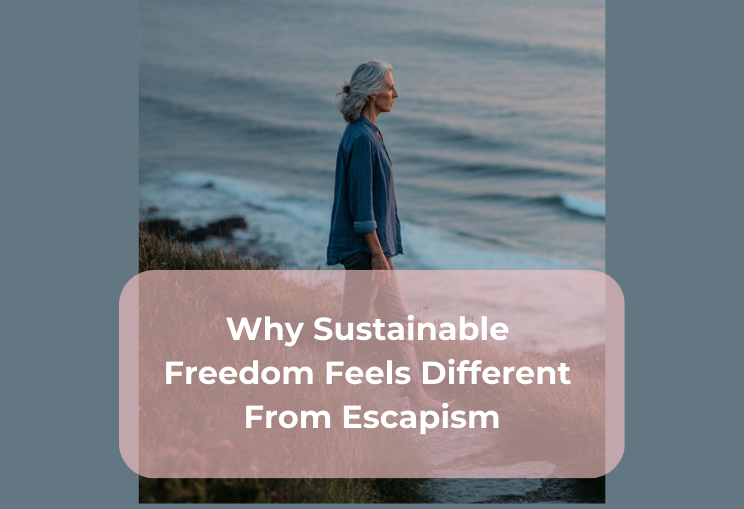
Sustainable freedom is not about running from something.
It is about building something stable enough that you do not need to run.
Escapism Drains Energy
Escapism often carries a hidden cost.
It may look like:
• Overbooking trips to avoid stress
• Constantly chasing novelty
• Changing environments without addressing root causes
• Seeking stimulation to mask fatigue
Initially, escapism feels relieving.
But afterward:
• Energy drops
• Clarity fades
• Problems remain
Escapism is reactive.
It is driven by discomfort.
Sustainable Freedom Protects Energy
Sustainable freedom, by contrast, preserves and compounds energy.
It includes:
• Structured routines
• Financial awareness
• Physical strength maintenance
• Walking mobility
• Emotional boundaries
• Recovery built into the schedule
This form of freedom feels calm.
It does not spike adrenaline.
It steadies the nervous system.
And that steadiness allows enjoyment.
The Midlife Perspective Shift
In earlier decades, freedom may have meant:
“Do more. Go further. Push harder.”
After 50, freedom often means:
“Choose wisely. Protect capacity. Move intentionally.”
That shift changes everything.
Sustainable freedom is not loud.
It is durable.
Travel Reveals the Difference
Travel provides a clear comparison between escapism and sustainable freedom.
Escapism travel feels rushed:
• Packed itineraries
• Late nights
• Minimal recovery
• Constant stimulation
Sustainable travel feels different:
• Fewer locations
• Longer stays
• Morning walks
• Balanced meals
• Built-in rest
One leaves you depleted.
The other leaves you strengthened.
Strength Is Part of Freedom
True freedom requires capability.
If walking long distances strains you excessively…
If carrying your bag feels unstable…
If recovery takes days…
Freedom becomes fragile.
Maintaining:
• Strength
• Stability
• Mobility
• Nutritional consistency
Protects independence.
And independence is freedom.
Emotional Stability Is Quiet Power
Sustainable freedom also includes emotional regulation.
Being able to:
• Say no calmly
• Decline environments that drain you
• Avoid unnecessary drama
• Choose relationships wisely
That is freedom.
Escapism avoids discomfort.
Sustainable freedom handles discomfort with steadiness.
Freedom Feels Safe — Not Chaotic
Here is the key distinction.
Escapism feels urgent.
Sustainable freedom feels safe.
Safe enough to enjoy.
Safe enough to explore.
Safe enough to reflect.
Safety does not reduce freedom.
It anchors it.
Energy Compounds When Freedom Is Stable
When your lifestyle includes:
• Predictable rhythms
• Consistent movement
• Structured work blocks
• Calm travel planning
• Recovery rituals
Freedom becomes sustainable.
It no longer depends on dramatic change.
It becomes your baseline.
And baseline freedom is powerful.
Sustainable Freedom Stabilizes It
Escapism reacts.
Sustainable freedom builds.
Escapism spikes emotion.
Sustainable freedom stabilizes it.
Escapism temporarily distracts.
Sustainable freedom strengthens capacity.
In midlife, freedom that preserves energy, supports resilience, and respects recovery is the kind that lasts.
And lasting freedom is far more satisfying than temporary escape.