Emotional security is rarely the result of dramatic change.
More often, it grows through steady lifestyle decisions made over time.
In midlife, people begin to value stability more deeply.
Predictability becomes comforting.
Structure becomes supportive.
Consistency becomes reassuring.
These elements create emotional security.
And emotional security supports wellbeing.
The Power of Long-Term Thinking
Short-term thinking often creates emotional turbulence.
Quick decisions.
Impulsive reactions.
Constant changes.
This environment makes the nervous system work harder.
Long-term lifestyle thinking changes the perspective.
Instead of reacting to every immediate pressure, decisions begin to consider:
• Future wellbeing
• Energy sustainability
• Financial stability
• Relationship harmony
That shift reduces emotional volatility.
Stability Reduces Mental Noise
When life contains constant uncertainty, mental noise increases.
Questions repeat:
• What should I do next?
• Is this sustainable?
• Am I moving in the right direction?
Long-term lifestyle thinking answers many of these questions in advance.
Daily structure becomes predictable.
Predictability reduces mental load.
Reduced mental load strengthens emotional balance.
Lifestyle Design Creates Safety
Lifestyle design is not only practical — it is psychological.
When daily life includes:
• Reliable routines
• Manageable commitments
• Stable financial structure
• Consistent movement habits
• Quiet reflection time
The nervous system experiences safety.
Safety allows emotional recovery.
Recovery allows resilience.
Travel Can Reinforce Emotional Clarity
Travel often provides space to evaluate lifestyle choices.
When stepping outside familiar routines, people frequently notice:
• Which habits feel supportive
• Which commitments feel unnecessary
• Which environments feel calming
These insights can influence long-term lifestyle design once home again.
Travel becomes a perspective tool.
Not simply a break.
Emotional Security Supports Better Decisions
When emotional security increases, decision quality improves.
People feel less urgency.
They become more patient.
Choices begin to align with long-term priorities rather than immediate pressure.
Calm environments support thoughtful decisions.
Thoughtful decisions strengthen stability.
Energy Stability Builds Emotional Strength
Energy stability influences emotional health more than many realize.
Irregular sleep, poor nutrition, and constant stress weaken emotional resilience.
Long-term lifestyle thinking protects energy through:
• Structured sleep routines
• Balanced meals
• Regular walking
• Recovery time
Stable energy supports stable emotions.
Financial Stability and Emotional Peace
Financial stability also contributes to emotional security.
When finances are structured thoughtfully:
• Anxiety decreases
• Planning becomes easier
• Unexpected challenges feel manageable
Lifestyle simplicity and intentional spending strengthen this stability.
Financial clarity supports emotional calm.
Midlife Is the Time for Sustainable Design
In earlier decades, people may tolerate instability while pursuing ambition.
After 50, priorities often change.
Many begin focusing on:
• Sustainable routines
• Emotional peace
• Health preservation
• Freedom with stability
Long-term lifestyle thinking supports these goals.
It transforms daily habits into long-term protection.
Security Midlife Design
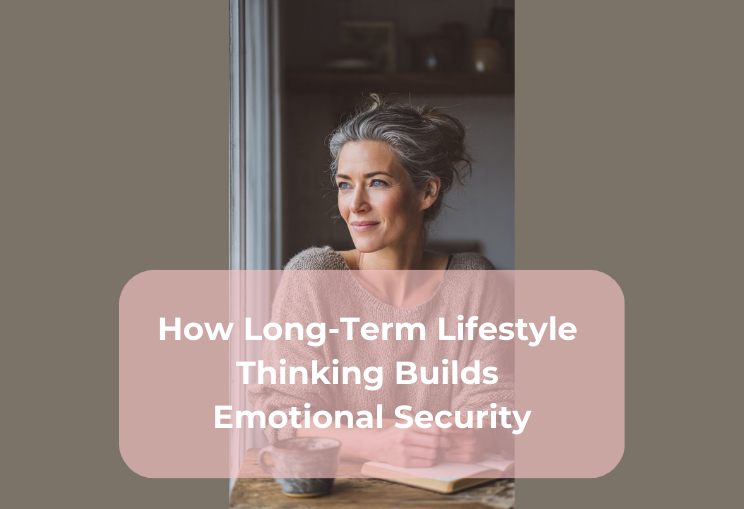
How long-term lifestyle thinking builds emotional security becomes clear when we examine the mechanisms.
Long-term thinking encourages:
• Consistent routines
• Calm environments
• Intentional financial habits
• Energy protection
• Measured decision making
These elements strengthen emotional resilience.
Security does not come from sudden change.
It grows from steady design.
And in midlife, that design becomes one of the most valuable investments we can make.