In midlife, something changes.
We no longer seek constant stimulation.
We no longer equate chaos with success.
We begin to understand that enjoyment requires stability.
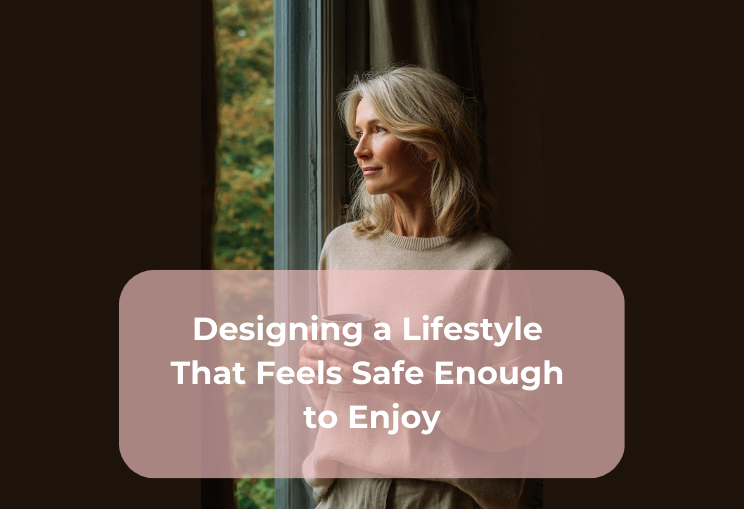
Designing a lifestyle that feels safe enough to enjoy is not about avoiding challenge.
It is about creating a baseline of steadiness that allows us to engage with life fully — without overwhelm.
Safety is not limitation.
It is foundation.
The Nervous System Matters More Than We Admit
A regulated nervous system is the invisible engine of wellbeing.
When life feels unpredictable, rushed, or unstable:
• Cortisol rises
• Sleep becomes shallow
• Decision-making narrows
• Patience decreases
But when daily life feels structured and predictable:
• Energy stabilizes
• Sleep deepens
• Thinking clears
• Enjoyment returns
This is especially true after 50.
The body appreciates rhythm.
And rhythm creates safety.
Travel Teaches This Clearly
One reason intentional travel works so well in midlife is that it temporarily resets structure.
When you:
• Choose slower walking routes
• Stay in one location longer
• Build a morning routine even while away
• Prioritize recovery
You feel something subtle.
Security.
And from that security, curiosity reappears.
Stability Is What Makes Exploration Possible
There is a misconception that safety reduces adventure.
In truth, safety enables it.
When your core pillars are stable:
• Physical strength
• Walking mobility
• Nutritional consistency
• Sleep recovery
• Financial awareness
• Emotional boundaries
You can explore without anxiety.
You can try new environments without internal threat response.
That is mature freedom.
Designing Daily Predictability
A lifestyle that feels safe enough to enjoy often includes:
• Consistent wake times
• Daily movement rituals
• Familiar meals with small variation
• Clear financial structure
• Manageable commitments
• Quiet reflection time
Predictability does not mean boredom.
It means bandwidth.
And bandwidth allows depth.
Emotional Safety Is Built, Not Found
Emotional safety is rarely delivered externally.
It is constructed intentionally.
Through:
• Boundaries
• Saying no calmly
• Avoiding unnecessary drama
• Choosing environments wisely
• Walking away from volatility
Travel can reveal which environments support calm — and which do not.
Those insights translate back into everyday life.
The Midlife Shift
In earlier decades, we often tolerated instability for the sake of ambition.
After 50, we recognize something more valuable:
Sustainable enjoyment.
The goal shifts from:
“How much can I achieve?”
To:
“How well can I live?”
That shift changes everything.
Energy Is the True Currency
Safety protects energy.
Energy supports resilience.
Resilience allows consistent growth.
Without safety, energy leaks.
With safety, energy compounds.
Designing a safe lifestyle is not about shrinking your world.
It is about protecting your capacity to experience it.
Travel as Lifestyle Testing Ground
Travel allows us to experiment with lifestyle design.
We can test:
• Slower pacing
• Digital boundaries
• Morning walking habits
• Simplified schedules
• Intentional eating
If these rhythms feel better away from home — they likely belong at home too.
Travel becomes research.
Not escape.
Space Allows Life To Be Experienced
Designing a lifestyle that feels safe enough to enjoy is not retreat.
It is intelligent construction.
It allows:
• Calm nervous system
• Stronger mobility
• Stable energy
• Clearer thinking
• Genuine enjoyment
Safety creates space.
And space allows life to be experienced — not just managed.
In midlife, that may be the most powerful design decision of all.