It can be beautiful.
It can be memorable.
But happiness from travel doesn’t come automatically.
After 50, happiness becomes less about novelty and more about alignment.
Alignment between how you travel and how you want to live.
When travel supports your broader lifestyle goals, satisfaction deepens.
When it conflicts with them, something feels slightly off — even if the trip looks impressive.
Travel as Lifestyle Reinforcement
Most people plan travel around:
Destinations.
Prices.
Seasonal deals.
Availability.
Few plan travel around identity.
Ask instead:
What kind of person am I becoming?
What lifestyle am I building?
What does my future self value?
If your long-term goals include:
• Physical independence
• Financial stability
• Emotional steadiness
• Sustainable health
• Calm living
Then your travel style should reflect those aims.
Otherwise, trips become disconnected experiences rather than reinforcing ones.
Happiness Increases When Actions Match Identity
Psychology consistently shows that alignment creates contentment.
When actions contradict values, friction develops.
If your lifestyle goal is longevity and strength, but your travel style involves exhaustion and over-scheduling, tension appears.
If your goal is financial security, but travel creates anxiety, satisfaction drops.
Planning travel around lifestyle goals removes that friction.
It creates coherence.
Lifestyle-Aligned Travel Looks Different
If your goal is physical independence:
You choose walkable cities.
You prioritise mobility-friendly accommodation.
You plan recovery days.
If your goal is financial steadiness:
You use predictable budgeting.
You avoid reactive spending.
You build buffer margins.
If your goal is emotional calm:
You avoid overscheduling.
You reduce decision fatigue.
You allow quiet time.
Travel becomes an extension of your values — not an escape from them.
After 50, Happiness Is Stability-Based
Earlier in life, happiness often came from intensity.
Now, it often comes from steadiness.
Deep conversations.
Comfortable routines.
Energy that lasts.
Memories without exhaustion.
Travel aligned with lifestyle goals reinforces these qualities.
It leaves you stronger — not depleted.
The Compounding Effect of Aligned Travel
When travel supports long-term goals:
Confidence grows.
Habits strengthen.
Independence extends.
Future planning becomes clearer.
Each trip becomes a rehearsal for the life you want to continue living.
That creates a powerful feedback loop.
Travel → Alignment → Happiness → Motivation → Better Travel
Questions to Ask Before Booking
Before confirming a trip, pause and reflect:
• Does this trip support my physical goals?
• Does it respect my financial plans?
• Does it align with my emotional energy needs?
• Will I return stronger or drained?
Small alignment adjustments dramatically improve satisfaction.
Travel Should Support Your Identity
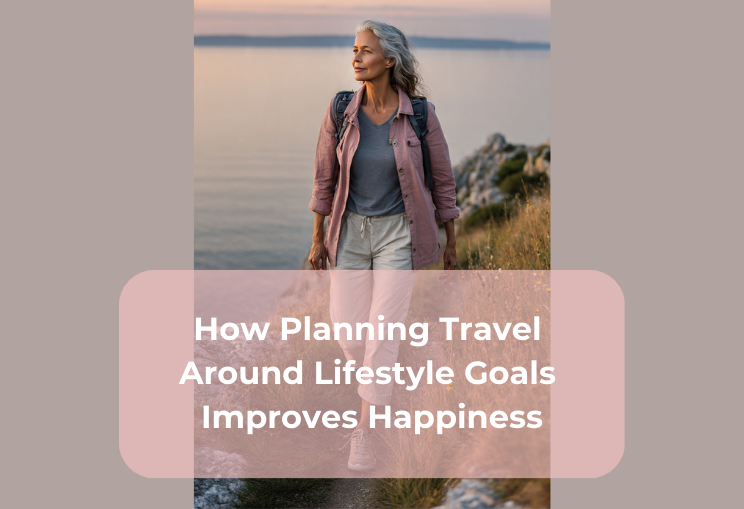
Planning travel around lifestyle goals improves happiness because it removes internal contradiction.
It connects experience to purpose.
It turns trips into reinforcements of the life you are building.
After 50, happiness rarely comes from chasing more.
It comes from living coherently.
Travel should support your identity.
Not disrupt it.
Plan with intention.
Travel with alignment.
Return home content.