Travel Is Exciting — But It Can Also Be Demanding
Travel often brings new energy into life.
New places.
Different cultures.
Fresh experiences.
But long travel periods can also place unexpected demands on the body and mind.
Walking long distances, adjusting to new environments, and constantly processing new information can gradually create fatigue.
Rest days help maintain balance throughout extended journeys.
Rest Days Protect Your Energy
When travel schedules remain constantly active, energy can slowly drain without being noticed.
Early in a trip, enthusiasm often masks this fatigue.
But after several busy days, many travellers begin feeling tired, unfocused, or overwhelmed.
Rest days provide the body with time to recover.
Energy levels stabilise, allowing travellers to enjoy the remainder of the journey more fully.
The Body Needs Recovery
Travel places physical demands on the body.
Long walking days.
Standing during sightseeing.
Carrying luggage.
Different sleep environments.
Without recovery time, these small physical stresses accumulate.
Rest days allow muscles, joints, and overall energy systems to reset.
This is especially helpful for midlife travellers who value sustainable activity rather than constant intensity.
Mental Clarity Improves With Rest
Travel also stimulates the mind.
New languages, unfamiliar streets, and constant decision-making can create mental fatigue.
Rest days allow the mind to slow down.
Instead of processing new information, travellers can relax, reflect, and enjoy quiet moments.
This often restores mental clarity for the next stage of the journey.
Rest Days Improve Travel Enjoyment
Interestingly, taking time to pause often improves the overall travel experience.
Rather than feeling pressured to visit every attraction, travellers begin enjoying the rhythm of the journey itself.
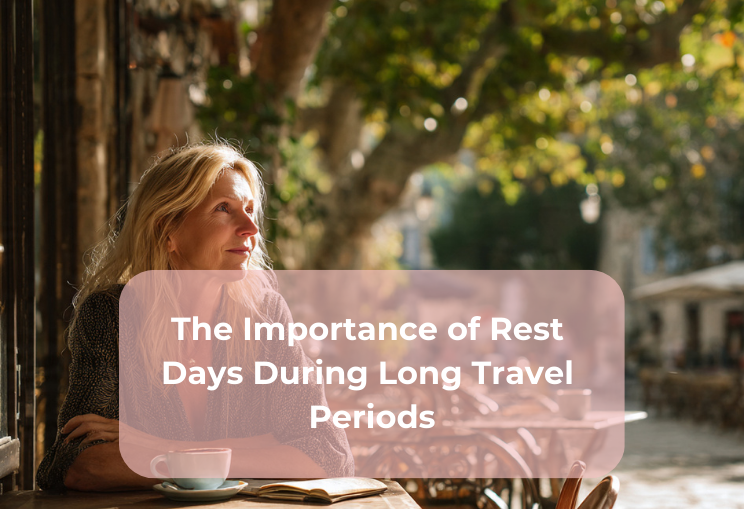
A slow morning coffee.
A quiet park walk.
Reading on a balcony.
These calm moments often become memorable parts of the trip.
Rest Days Help Prevent Travel Burnout
Extended travel without breaks can lead to travel burnout.
Signs may include:
• fatigue
• irritability
• loss of enthusiasm
• difficulty making decisions
Rest days act as a reset point, allowing travellers to regain enthusiasm and continue exploring with fresh perspective.
Planning Rest Days Into Your Travel Rhythm
Many experienced travellers now plan recovery days intentionally.
A common approach is a “2–3 day exploration rhythm.”
For example:
Day 1 – active exploration
Day 2 – moderate sightseeing
Day 3 – rest or light activity
This pattern keeps energy balanced throughout longer trips.
Gentle Activities for Travel Rest Days
Rest days do not necessarily mean staying indoors all day.
Gentle activities often work well:
• relaxed walks
• café visits
• reading or journaling
• enjoying local parks
• light stretching or mobility exercises
These activities maintain enjoyment without draining energy.
Midlife Travel Benefits From Sustainable Rhythm
As travellers gain experience, many begin prioritising sustainability over speed.
Balanced travel pacing supports:
• physical wellbeing
• mental clarity
• deeper enjoyment of destinations
Rest days play an essential role in maintaining that rhythm.
Adventure And Recovery
The importance of rest days during long travel periods becomes clear over time.
Recovery days allow travellers to:
• protect energy
• maintain enthusiasm
• prevent burnout
• enjoy experiences more deeply
Travel becomes less about constant movement and more about balanced exploration.
And when journeys include both adventure and recovery, the overall experience becomes far more rewarding.