Busy Is Not the Same as Meaningful
Many people equate being busy with being productive.
Full calendars, constant notifications, and endless to-do lists can create the feeling of progress — but often without the satisfaction.
Being busy fills time.
Being engaged fills life.
Understanding the difference can change how you work, travel, and live.
Why Busy Often Feels Draining
Busyness usually comes with:
- Constant switching between tasks
- Shallow attention
- Pressure to respond quickly
- Little sense of completion
Even when a lot gets done, the day can feel scattered and exhausting.
Busyness consumes energy without restoring it.
Engagement Feels Different in the Body
Being fully engaged feels calmer.
When you’re engaged:
- Attention deepens
- Time feels steadier
- Decisions feel clearer
- Energy feels more focused
Engagement doesn’t require intensity — it requires presence.
Travel Reveals the Difference Clearly
Travel often exposes how busy habits follow us.
You might:
- Rush from place to place
- Try to “see everything”
- Over-plan each day
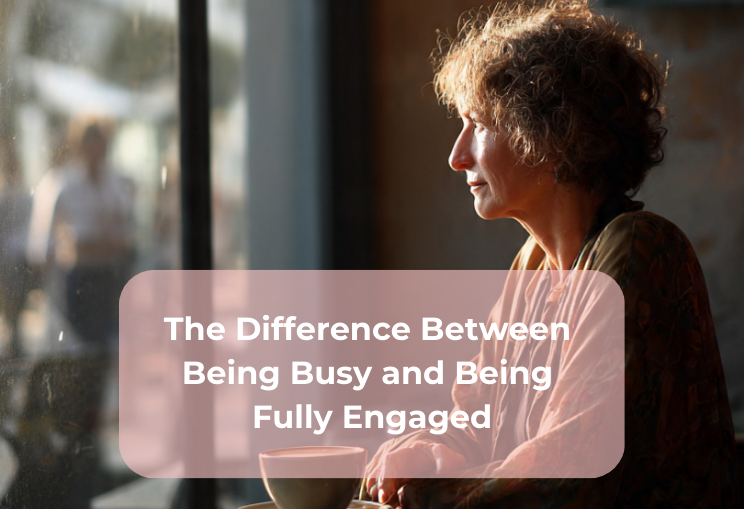
But the most meaningful travel moments usually come when you slow down:
- Sitting quietly in a café
- Walking without destination
- Observing rather than collecting experiences
Engagement replaces busyness — and enjoyment increases.
Midlife Naturally Shifts the Priority
In midlife, many people notice:
- Less tolerance for constant pressure
- Greater awareness of energy limits
- Stronger desire for depth over volume
Busyness starts to feel hollow.
Engagement starts to feel valuable.
This shift is not a loss of ambition — it’s a gain in clarity.
Engagement Supports Sustainable Productivity
Engaged work often produces better results with less strain.
It allows you to:
- Focus on fewer priorities
- Complete tasks more cleanly
- Reduce rework and distraction
- Feel satisfied at the end of the day
Progress becomes steadier and easier to maintain.
Engagement Protects Emotional Energy
When you’re busy, emotions are often reactive.
When you’re engaged, emotions feel more stable.
Engagement reduces:
- Irritation
- Overwhelm
- Decision fatigue
- Comparison
Calm focus replaces constant urgency.
You Can Redesign Your Days for Engagement
Shifting from busy to engaged doesn’t require radical change.
Small adjustments help:
- Fewer daily priorities
- Clear start-and-stop points
- Single-task focus where possible
- Built-in pauses
These changes protect attention — and attention shapes experience.
TravelWell LiveGood Is Built on Engagement
The TravelWell LiveGood philosophy prioritises:
- Engaged living over rushed living
- Meaningful progress over constant effort
- Presence over performance
This creates a lifestyle that feels calmer, more capable, and easier to sustain long term.
Life Feels Richer
Being busy keeps you occupied.
Being fully engaged keeps you connected.
When you shift your focus from doing more to being present with what matters, life feels richer — even when it becomes simpler.
That difference changes everything.