Constant Change Is Often Mistaken for Growth
Modern life celebrates change.
New plans.
New systems.
New ideas.
New beginnings — again and again.
But constant change doesn’t always create growth.
Often, it creates tension.
Especially in midlife, many people realise that movement doesn’t automatically equal progress.
Why Constant Change Feels Draining
Frequent change demands:
- Repeated decision-making
- Continuous adaptation
- Emotional readjustment
- Ongoing uncertainty
Over time, this drains mental and emotional energy — even when the changes are positive.
The nervous system never fully settles.
Consistency Creates a Sense of Safety
Consistency offers something powerful:
predictability.
Predictability:
- Lowers stress
- Reduces mental load
- Improves emotional regulation
- Allows energy to stabilise
When life becomes more predictable, the body and mind relax — and enjoyment increases.
Travel Shows This Clearly
While travelling, people often feel calmer once a rhythm forms:
- The same café each morning
- The same walk each evening
- Familiar routines in unfamiliar places
It’s not novelty that creates comfort — it’s repetition.
Consistency allows travel to feel restorative rather than overwhelming.
Midlife Rewards Stability More Than Novelty
In midlife, energy becomes a valuable resource.
Consistency:
- Protects energy
- Improves follow-through
- Builds confidence
- Makes life feel manageable
Novelty still has a place — but stability becomes the foundation.
Consistency Builds Trust in Yourself
Each repeated action reinforces a quiet belief:
“I can rely on myself.”
That trust is deeply grounding.
Confidence grows not from constant reinvention — but from steady reliability.
Calm Progress Comes From Staying With What Works
When something works, staying with it:
- Deepens skill
- Reduces friction
- Improves results
- Removes pressure
Constant change often interrupts progress before it has time to mature.
Consistency allows progress to settle.
Change Isn’t the Enemy — Chaos Is
This isn’t about avoiding change completely.
It’s about choosing change intentionally rather than reactively.
Consistency provides the stable ground from which healthy change can occur.
Life Feels Kinder When It’s Easier to Run
A consistent life:
- Requires fewer decisions
- Has fewer surprises
- Supports recovery
- Leaves room for enjoyment
Life stops feeling like a constant reset — and starts feeling lived.
Consistency Supports Long-Term Freedom
Freedom isn’t created by endless change.
It grows when life becomes:
- Predictable enough to trust
- Simple enough to repeat
- Flexible enough to adapt gently
Consistency is what allows freedom to last.
Sustainable Living At Its Best
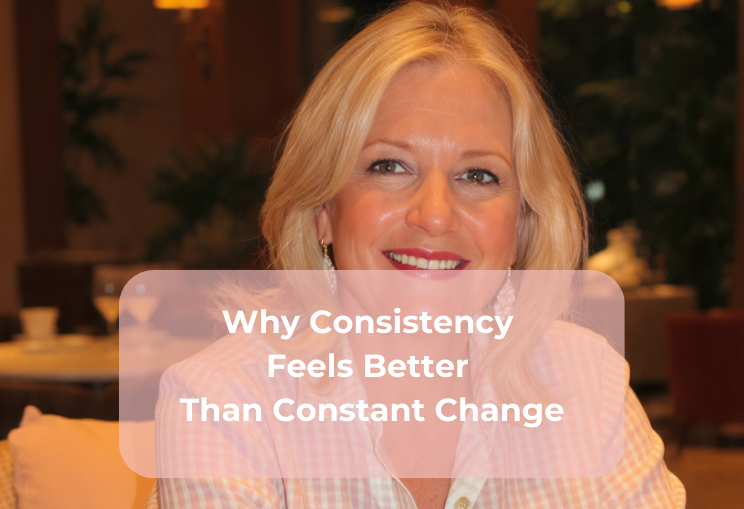
Consistency often feels better than constant change because it reduces strain.
When routines repeat, energy stabilises.
When progress is steady, confidence grows.
When life feels manageable, freedom deepens.
That’s not stagnation — it’s sustainable living at its best.